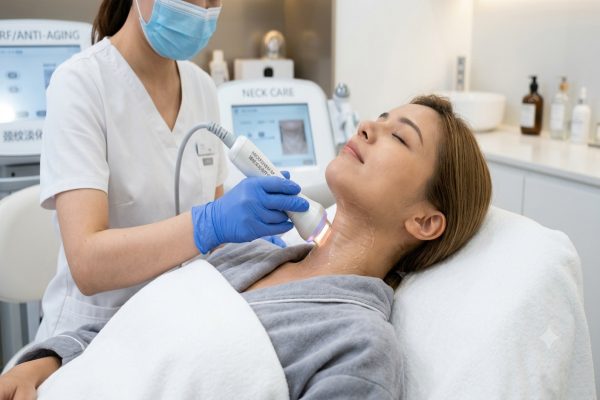
Neck Wrinkle Treatments: Korean Approach, Results & Costs
What Makes the Difference — Protocol, Dosage, and Practitioner Skill
Protocol choice: Mild fine lines may only need micro-botox. Moderate horizontal lines require HA fillers. Deep wrinkles with sagging skin often need combination with ultrasound/RF lifting. Wrong protocol = poor results.
Dosage & depth: Neck skin is thinner than facial skin. Too little or too shallow = minimal effect; too deep or too much = lumps. Experience is critical.
Practitioner experience: Korean doctors perform neck injections daily, mastering neck anatomy. They confidently use higher doses and precise depths, achieving more immediate smoothing. Southeast Asian practitioners tend to be more conservative. Know which style you’re getting.
Two Outcome Pathways — Dramatic vs. Natural
Dramatic smoothing: Adequate doses and precise depths make lines visibly disappear immediately. More swelling and pinpoint marks, but impressive contrast. Korean clinics favor this approach.
Natural improvement: Lower doses, subtler. Gradual smoothing over 1–2 weeks, undetectable. For those who prefer not to show they had work done.
Treatment Options Compared
| Comparison | HA Fillers | Micro-Botox | Ultrasound/RF |
|---|---|---|---|
| Target | Dermis (fill lines) | Muscle (relax) | SMAS + deep dermis |
| Effect | Fill static lines | Soften dynamic fine lines | Lift sagging skin |
| Best for | Visible horizontal creases | Fine crinkly lines | Loose neck skin |
| Onset | Immediate, stable 1-2w | 1-2 weeks | 2-3 months |
| Duration | 6-12 months | 3-6 months | 1-2 years |
Korean clinics often combine treatments — micro-botox for fine lines, fillers for deep creases, and RF/ultrasound for sagging, addressing all layers.
Cost Breakdown — Korea vs. Southeast Asia
Consumables: Korean-made filler ~109,000 KRW/cc; imported (Belotero) ~450,000 KRW/cc; Juvederm ~350,000 KRW/cc. Micro-botox: domestic ~80,000 KRW, imported ~100,000 KRW.
Practitioner skill: The same filler, injected by an experienced lead doctor vs. a junior, yields vastly different results.
Clinic location: Gangnam costs more but offers better equipment and expertise.
Korea vs. SG: 1cc imported filler in Gangnam ~SGD 320–420; in Singapore ~SGD 600–900. But factor in flights/accommodation — a single treatment trip may not save money unless combined with other procedures.
Within Korea, budget clinics are high-volume with limited attention; premium clinics offer personalized care. The price difference is about clinical judgment, not the product.
Real Experience — Procedure to Recovery
Before: Doctor examines line type and depth (congenital vs. age-related).
During: Topical anesthetic ~20–30 min. Injection ~20 min, tolerable discomfort. Korean doctors work faster due to experience.
Immediate after: Deep lines visibly lighten; mild redness and tiny points normal.
Days after: Avoid alcohol, saunas, hot baths, strenuous exercise for 3–7 days. Redness subsides, points heal.
1–2 weeks: Results stabilize; lines become barely visible from most angles.
What to Expect — Results, Duration, and the Recovery Curve
When do results appear? The improvement from HA fillers is visible immediately after injection, but the final result takes about 1 to 2 weeks to stabilize once swelling subsides. Micro-botox takes 1 to 2 weeks to fully kick in. Ultrasound/RF lifting takes the longest — noticeable changes typically appear after 2 to 3 months.
How long does it last? This varies by method. HA fillers generally last 6 to 12 months, depending on the brand and individual metabolism. Micro-botox lasts 3 to 6 months. Ultrasound or RF lifting can last 1 to 2 years. It’s important to understand that these are maintenance treatments — not permanent fixes. Most Korean patients treat them as part of an annual skincare routine, returning for touch-ups as needed.
What does the recovery curve actually look like? Don’t judge the final result by what you see on day one. Immediately after injection, there’s often mild swelling that can make lines look completely gone — but this is temporary. Over the next few days, as swelling subsides, the lines will reappear slightly. This is normal. The true, stable result settles in around the 1 to 2 week mark. If you evaluate the treatment at day 3, you’ll likely be disappointed. Evaluate it at week 2.
When to do a touch-up? Korean dermatologists typically recommend monitoring the result and scheduling a touch-up when lines start to become more visible again — usually around the 6 to 9 month mark for fillers. Some patients prefer to come in earlier for a small maintenance dose rather than waiting until the product has fully metabolized. The key is consistency — a small touch-up every 8 to 12 months often yields better cumulative results than waiting for lines to fully return before re-treating.
Three Questions to Ask Yourself
1. Static or dynamic lines? Static (visible at rest) → fillers. Dynamic (only on movement) → micro-botox. Unsure? Consult a doctor.
2. Recovery tolerance? Can handle needles, mild redness, and a few days of marks → fillers. Need zero downtime → topical products (limited effect).
3. Budget and travel? Korea offers better value for imported fillers with experienced doctors. If already travelling, it’s worth it. For a dedicated trip, combine with other procedures to offset costs.
When consulting, ask: What protocol and why? Dosage and depth? Years of neck experience in Korea? Clear explanation beats a cheap quote. Core logic: know your line type, then find the right doctor.