Botox Side Effects: A Complete Map from Normal Reactions to Warning Signs | Korea Guide
Online reviews about Botox mostly focus on “how much slimmer my face looks” or “how much my wrinkles faded.” Few people seriously discuss one question: if side effects occur, what do they look like? When do they appear? How serious are they?
Many people, when experiencing discomfort after Botox, hear the same advice: “Just wait a few days, it’ll pass.” But some side effects can wait, while others demand serious attention. This article won’t cover how to choose Botox or where to inject for best results. Instead, we’ll break down the side effect timeline, types, and severity to help you distinguish between normal reactions and things worth watching.
Post-Injection Local Reactions: Redness, Bruising, and Headaches Are Normal
The most common post-Botox reactions aren’t actually caused by the Botox itself, but by the physical act of injection.
【Redness, pain, and bruising at the injection site】are the most common. The needle pierces the skin, capillaries rupture, and subcutaneous bruising appears. This is normal. It typically occurs within hours to 2-3 days after injection and resolves on its own within 1-2 weeks. These reactions don’t affect the final result — cold compresses can help.
【Headaches】are also frequently reported. They appear within 24-48 hours after injection, typically last 1-3 days, and then resolve on their own. The cause may be temporary tension or an inflammatory response in the muscles around the injection area.
【Muscle weakness or tightness at the injection site】is a normal sign that the Botox is working. Difficulty chewing after masseter injections, difficulty raising eyebrows after forehead injections — this is exactly Botox “letting the muscles rest,” not a side effect.
These local reactions share common traits: they appear within hours to 2-3 days after injection, last 1-2 weeks, resolve on their own before the Botox metabolizes, and require no additional treatment.
Botox-Related Expression Issues: Stiffness, Asymmetry, and Eyelid Drooping
These are the most common Botox side effects. The problems usually stem from dosage, injection placement, or injection technique.
【Facial expression stiffness:】Caused by overdose, improper placement, or massaging the face after injection which spreads the Botox. The result is unnatural expressions — a “skin-deep smile” or a wooden-looking face. This typically becomes noticeable several days to 1-2 weeks after injection.
【Facial asymmetry:】Uneven dosing or placement between left and right sides causes one side to relax while the other remains active. When smiling, the corner of the mouth pulls to one side, or one eyebrow sits higher than the other.
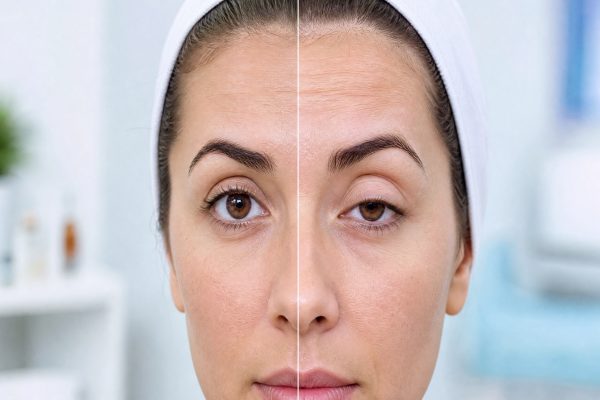
【Eyelid drooping (ptosis):】When Botox injected into the forehead or between the brows spreads to the levator palpebrae superioris (the muscle that lifts the eyelid), the eyelid can’t lift properly. This typically appears within several days to 1 week after injection.
【Brow ptosis:】After forehead injections, the eyebrows get “pushed down,” making the eyes look smaller and droopier.
These issues boil down to three causes: excessive Botox dosage; inaccurate injection placement; massaging or pressing the area after injection, causing Botox to spread.
The vast majority of these cases are temporary. As the Botox metabolizes over time, these side effects typically ease within 2-3 weeks, though some may persist for months.
Korean doctors follow this principle: better to inject conservatively than to overdo it and cause problems. This “conservative dosing” principle is especially applicable for first-time Botox recipients.
Botox Drug Spread: Warning Signs Worth Watching
The most serious concern with Botox is the drug spreading to non-target muscles.
Botox works by blocking acetylcholine release at nerve endings, temporarily preventing muscles from “receiving contraction signals.” If the drug spreads to muscles controlling swallowing or breathing, problems can arise.
【Difficulty swallowing:】Botox spreads to pharyngeal muscles, affecting normal swallowing function. Food or drink feels like it “won’t go down,” or easily gets aspirated into the airway. This is a sign worth noting — it means Botox may have affected non-target muscles.
【Breathing difficulty:】Botox spreads to the diaphragm or intercostal muscles (the main muscles controlling breathing), causing respiratory muscle weakness. You feel like you “can’t catch your breath,” breathing becomes shallow and rapid. This is a signal that deserves serious attention.
【Generalized muscle weakness:】Botox spreads through the bloodstream or lymphatic system throughout the body, causing overall weakness, difficulty lifting the head, and limb weakness.
Why does spreading happen? Three main reasons: excessive Botox dosage; improper injection placement; using Botox products of unknown origin or non-standard concentration.
Timeline of spread issues: typically appears within hours to days after injection. Precisely injected Botox at a legitimate medical facility will not cause systemic toxicity. However, if you’ve used products of unknown origin and experience the above symptoms after injection, seek medical attention promptly.
- 【Signs that warrant serious attention:】If you experience difficulty swallowing, breathing difficulty, generalized weakness, eyelid drooping, or blurred vision after Botox injection, seek medical attention promptly — do not wait.
Botox Neutralizing Antibodies: What Long-Term Users Need to Know
This is something long-term Botox users may encounter.【The development of neutralizing antibodies】is a potential issue from repeated, long-term Botox injections.
The body recognizes Botox as a “foreign invader” and produces antibodies to “neutralize” it. When antibody levels are high enough, subsequent Botox injections simply won’t work. One large observational study found that nearly 14% of long-term Botox patients had detectable neutralizing antibodies.
Antibody development doesn’t affect your health, but it means you’re paying the same money for diminishing results — or even no results at all. How to manage this: avoid overly frequent injections, give your body enough time to metabolize the previous Botox; start with low doses, don’t inject too much at once.
Botox Allergic Reactions: Rare but Worth Knowing
Though uncommon,【allergy to the Botox ingredients themselves】does exist. Symptoms include rash, itching, and breathing difficulty. The literature also contains case reports of delayed-type skin allergic reactions — appearing only after multiple Botox injections. If you develop a widespread rash, itching, breathing difficulty, or throat swelling after injection, seek medical attention promptly.
- 【In a nutshell:】In the hands of a qualified doctor, Botox is a safe and effective tool. The problem never lies with the drug itself, but with dosage, placement, product source, and operator experience. Same Botox, different practitioner — the risk profile is worlds apart. When choosing a doctor, how they assess your muscle condition, how they explain risks, and how they determine dosage matters far more than the price quote.
* This article is for reference only. Specific treatment plans and risks should be based on a professional doctor’s in-person consultation.