Laser Scar Removal: Ablative vs Non-Ablative — CO2, Fraxel, Prices & Recovery in Korea
There is a lot of discussion online about laser scar removal. Some say their acne scars flattened out and their skin looked like a fresh layer — totally worth it. Others say they spent a lot of money and not only saw no improvement, but also experienced post-inflammatory hyperpigmentation for months, regretting it deeply. Same laser scar removal, why such drastically different experiences? The difference lies not in “whether laser works,” but in whether you chose 【ablative or non-ablative】 — these two words determine your recovery period, efficacy intensity, side effect risks, and ultimately whether it is worth it. Korean dermatologists have accumulated extensive clinical experience in scar repair, and there are indeed reference-worthy points in the indications and technical approaches of different laser devices. This article skips complex medical principles and gets straight to how to choose between CO2 fractional and Fraxel, what accounts for the price difference, how long recovery takes, and which clinics do it well, helping you decide whether this investment is worth it or not.
Laser Scar Removal from CO2 to Fraxel: What Is the Difference Between Ablative and Non-Ablative
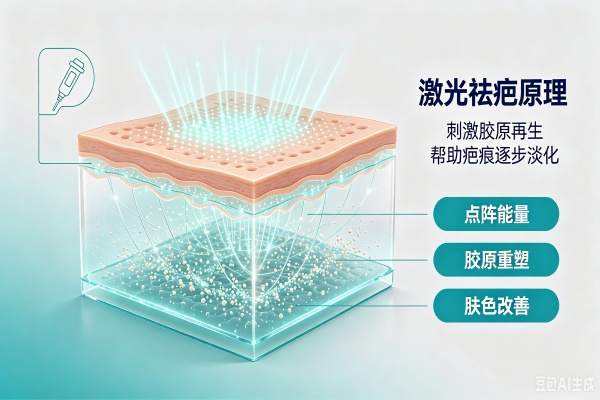
Fractional laser is the recognized core technology in scar repair — it forms microscopic thermal injury zones in the skin, stimulating collagen and elastic fiber regeneration to achieve repair goals. But fractional laser is not “one type of laser” — there are two major categories: 【ablative】 and 【non-ablative】.
【Ablative fractional laser (representative devices: CO2 laser, UltraPulse Encore):】 Creates perforations on the skin surface for thermal ablation, forcing skin renewal. Direct action with strong regenerative capacity, but relatively longer recovery. Treatment can reach deep layers, with skin regeneration capacity approximately 5 times that of non-ablative types. Suitable for deep, stubborn atrophic scars.
【Non-ablative fractional laser (representative device: Fraxel Dual):】 Stimulates the dermis through thermal energy while preserving epidermal integrity. Short recovery time, fewer side effects. Suitable for shallow acne scars, scar texture improvement. However, multiple sessions are required, and cumulative discomfort can be significant.
Korean doctors often 【combine both】 devices in scar treatment — UltraPulse Encore for deep scars, Fraxel for shallow depressions. So “which one to choose” is not a single-answer question, but rather “what does your scar need.”
Acne Scars, Surgical Scars, Burn Scars — Different Scars Require Different Laser Protocols
When Korean dermatology clinics treat scars, the core logic is “【type-specific treatment】” — different shapes and different depths of scars require completely different devices.
- 【Icepick Scars:】 Narrow, deep, pitted scars. TCA CROSS (high-concentration trichloroacetic acid spot application) is a common approach, and can be combined with non-ablative fractional laser for gradual improvement.
- 【Boxcar Scars:】 Depressed scars with clearly defined edges, as if a piece has been scooped out. Ablative CO2 fractional laser is the first choice — smoothing edges through thermal ablation and stimulating deep collagen regeneration.
- 【Rolling Scars:】 Wavy, uneven scars with fibrous bands pulling from beneath the skin. Korean doctors typically perform 【Subcision】 first to sever the pulling bands, then use CO2 fractional laser to smooth the surface.
- 【Hypertrophic Scars/Keloids:】 Raised, red scars. Surgical excision with meticulous suturing is the primary approach, with postoperative laser or medication injections to reduce recurrence risk.
- 【Burn/Surgical Linear Scars:】 Scar excision with W-plasty meticulous suturing is the core. For large-area scars, Korean doctors adopt 【staged excision】 to reduce trauma.
This is why Korean dermatology emphasizes “diagnose first, then treat” — a single person’s face may have multiple types of scars requiring combination protocols, not “one machine for everything.”
Prices from 200,000 to 1,500,000 KRW — What Accounts for the Difference
Laser scar removal prices vary widely, depending primarily on device type, treatment area, and whether regenerative injections are included.
| Treatment Method | Single Session Reference Price (KRW) | Approx. RMB |
|---|---|---|
| Ablative CO2 Fractional (UltraPulse) Full Face | 300,000-700,000 | approx. 1,600-3,800 |
| Ablative CO2 Fractional (Localized) | 150,000-400,000 | approx. 800-2,100 |
| Non-Ablative Fraxel/Picosecond Fractional | 200,000-600,000 | approx. 1,100-3,300 |
| Subcision | 200,000-450,000 | approx. 1,100-2,400 |
| RF Microneedling | 300,000-700,000 | approx. 1,600-3,800 |
| Regenerative Injections (Juvelook/Rejuran) | 350,000-900,000 per vial | approx. 1,850-4,800 |
| Korean dermatology clinics often 【combine the above into packages】 — single laser session + subcision + regenerative injections, termed the “One-Day Scar Eraser.” 3-session packages are typically 20%-30% cheaper than cumulative single-session pricing. |
【Korea vs Southeast Asia:】 Korea CO2 laser full face approx. 300,000-700,000 KRW (approx. 1,600-3,800 RMB); equivalent treatment in Singapore typically SGD 600-1,500 (approx. 3,200-8,000 RMB), 40%-50% more affordable. The price gap stems from Korea’s high dermatology clinic density, intense competition, and lower device procurement costs.
CO2 Fractional Laser Recovery Timeline — 7 to 14 Days, Every Step Affects the Final Result
Ablative CO2 fractional laser recovery is the most anxiety-inducing part of the decision for many. Here is the realistic timeline:
- 【Days 1-3 post-procedure:】 Treatment area is red, swollen, and stinging, with possible light exudate, followed by crusting. This is the “toughest” phase — it looks worse than before treatment.
- 【Days 7-14 post-procedure:】 Scabs gradually shed, revealing fresh skin that is pale pink. Do not peel scabs by hand during this period — let them fall off naturally.
- 【Months 1-3 post-procedure:】 Skin color slowly returns to normal, collagen continues to regenerate. During this phase 【strict sun protection is the baseline】 — without sun protection, the risk of hyperpigmentation is extremely high.
- 【Months 3-6 post-procedure:】 Skin continues remodeling, results gradually reach their peak. This is also why Korean doctors typically recommend 【4-6 week intervals between sessions】, with 3-5 sessions as a complete course.
【Non-ablative Fraxel recovery】 is much shorter — typically 3-5 days to resume normal social activity. But improvement is gradual, often requiring more sessions.
Laser Scar Removal Side Effects — Hyperpigmentation, Redness, Hypopigmentation, and How to Avoid Them
The most common side effect of laser scar removal is 【Post-Inflammatory Hyperpigmentation (PIH)】 — also known as “rebound darkening.” Asian skin types are significantly more prone to this risk than Caucasians.
【Why does rebound darkening occur?】 Ablative laser removes the epidermis, and newly generated skin is extremely sensitive to UV radiation. If postoperative sun protection is inadequate, melanocytes become over-activated.
【How to avoid it?】 First, 【strict physical sun protection for 3 months post-procedure】 (hat + mask + sunscreen); second, use repair products post-procedure to accelerate healing; third, choose 【non-ablative laser】 (such as Fraxel) to significantly reduce the risk of rebound darkening.
Other side effects include: 【redness and burning sensation in treatment area】 (normal reaction for 1-3 days post-procedure); 【hypopigmentation】 (rare, usually related to excessive energy or improper technique); 【infection】 (caused by improper postoperative care). Choosing a reputable clinic and an experienced doctor is the most effective way to avoid these issues.
Korean Laser Scar Removal Clinic Recommendations
- 【Dr.ham Plastic Surgery:】 Located on Apgujeong-ro, Gangnam-gu, Seoul. Led by Director Han Hee-jung, with a team all possessing over 10 years of scar repair experience. Laser scar removal starts at approx. 1,200 RMB per session; cost increases by approx. 300 RMB for every additional 5cm². Employs W-plasty meticulous suturing technique.
- 【Lumiin Dermatology:】 Gangnam-gu, Seoul. Director personally conducts consultations and procedures. Reepot ultra-cryo laser combined with RF microneedling protocol has drawn attention in acne scar repair. Chinese language reception available.
- 【Ahn Sung-yeol Plastic Surgery:】 Nonhyeon-dong, Gangnam-gu, Seoul. Director Ahn Sung-yeol holds dual specialty qualifications in both plastic surgery and dermatology. The institution has been established for 44 years.
- 【The First Dermatology:】 Busan and Seoul locations. 7 board-certified dermatologists, 60 international top-tier devices. UltraPulse CO2 fractional laser single session approx. 300,000-600,000 KRW.
- 【Baid Dermatology:】 839 Nonhyeon-ro, Gangnam-gu, Seoul. Offers laser lifting, pigmentation removal, scar treatment, and other services with transparent pricing.
- 【Chang Dermatology:】 Samseong-dong, Gangnam, Seoul. Balances medical dermatology with aesthetic skin management, offering scar repair and combined device anti-aging treatments.
Laser scar removal results hinge on 【choosing the right device, completing the full course, and diligent sun protection】. Ablative CO2 fractional laser is the “gold standard” for deep acne scars, but comes with long recovery and high risk of rebound darkening. Non-ablative Fraxel has a short recovery period but requires more sessions. Korean doctors typically 【combine multiple modalities】 based on scar type. If you are willing to give your skin 3 to 5 treatments and 3 to 6 months for collagen to slowly “grow” in, laser scar removal will most likely not disappoint. But if you seek “one session to flatten everything” and cannot accept 7 to 14 days of recovery, it may not be for you.
— This article was written based on an in-depth medical aesthetics analysis framework, with the Korean factor naturally integrated as a reference —