How Often Should You Get Skin Boosters? The Korean Dermatology Guide to Treatment Frequency
“Doctor, I got one skin booster session and didn’t see much effect.”
This is one of the most common phrases Korean dermatologists hear. Many spend thousands on a single skin booster session, notice slightly brighter skin after a week, but see it revert after two weeks — concluding: “Skin boosters don’t work.”
What went wrong? 【It’s not that skin boosters don’t work — you only got one session.】
A Single Session Is Not a “Solution”
Skin boosters are not a “one injection lasts half a year” treatment. The core ingredient is small-molecule hyaluronic acid — soft in texture and fast-metabolizing, gradually absorbed by the body within about 【1-3 months】. After a single session, skin hydration does temporarily increase, but this is like watering dry soil once — after evaporation, the soil is still dry.
After entering the dermis, skin boosters quickly increase skin hydration, improve dryness and flaking; added ingredients like vitamin C and glutathione can inhibit melanin production and brighten skin tone; they also stimulate dermal collagen synthesis, fill static fine lines, and increase elasticity. But these improvements need to 【accumulate】 before becoming a “qualitative change.”
【A single skin booster session sends a “signal” to the skin: time to repair.】 But this signal is too brief — before the skin can establish a new metabolic balance, the nutrients have already been metabolized.
Three Sessions Make a “Foundational Course” — When Effects Truly Compound
In Korean dermatology, skin booster treatment logic is never “one session” but 【”a course of treatment.”】
The standard protocol: 【one injection per month for 3 consecutive sessions】 as a complete foundational course.
Why three? The skin’s 【renewal cycle is approximately 28 days】. After the first session, the skin begins hydrating and activating repair mechanisms; at the second session, the first session’s effects haven’t fully faded, and new nutrients compound on top — effects begin accumulating; after the third session, the skin’s hydration state, barrier function, and collagen activity truly reach a 【new equilibrium point.】
A Korean dermatologist once compared it this way: 【The first session “lays the foundation,” the second “builds the walls,” the third “puts on the roof.”】 Complaining about no results after one session is like asking why the house isn’t built when only the foundation has been dug.
From “Intensive Treatment” to “Long-Term Maintenance”
After completing the 3-session foundational course, skin condition enters a relatively stable phase. At this point, the injection frequency can be 【significantly reduced.】
Depending on skin condition and individual needs, maintenance intervals are typically 【once every 2 to 3 months】. For long-lasting skin boosters with micro-cross-linked ingredients, intervals can extend to 【3 to 6 months】. After a complete course, overall results can last 【10 to 12 months.】
【The Korean dermatology logic is not “injection addiction” but “using 3 intensive sessions for one year of stable skin.”】
What Can Skin Boosters Actually Do?
Skin booster effects depend on the formula, but core benefits focus on four areas:
- 【Deep hydration:】 Injects small-molecule hyaluronic acid directly into the dermis, forming a water-storage network, quickly increasing skin hydration and improving dryness and flaking.
- 【Brightening skin tone:】 Added antioxidants like vitamin C and glutathione inhibit melanin production, accelerate metabolism of deposited pigment, and improve dullness and sallowness.
- 【Fading fine lines:】 Stimulates dermal collagen and elastin synthesis, fills static fine lines, increases elasticity, and improves age-related laxity.
- 【Shrinking pores:】 Hydrates around hair follicles, restores skin support structure, regulates sebum production, and improves rough texture.
Skin boosters are not a “miracle cure” — they have limited effect on deep pigmentation and severe wrinkles. But for dehydration, dullness, fine lines, and enlarged pores, the improvement is clear and proven.
Too Frequent Can Actually Reduce Effectiveness
“The more frequent, the better” is a common misconception about skin boosters.
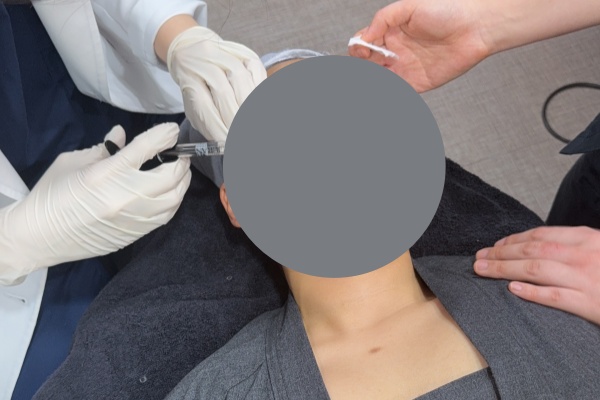
Skin boosters use needles to inject hyaluronic acid into the dermis — a 【minimally invasive procedure】. After each session, the skin needs a recovery period, and the skin’s metabolic cycle takes about 28 days. If treatments are done frequently before the skin has fully recovered, it’s like repeatedly irritating unhealed wounds. Over time, the skin barrier continues to be damaged, water-retention capacity decreases instead of increasing, and sensitivity symptoms like dryness, redness, and stinging may appear.
【The essence of medical aesthetics is “appropriate correction,” not “frequent intervention.”】 Skin boosters are not about doing it as often as possible — they’re about doing it 【as scientifically as possible.】
Summary: How often should you get skin boosters?
- 【Initial phase:】 Once per month, 3 consecutive sessions, completing the foundational course
- 【Maintenance phase:】 Once every 2-3 months to maintain results
- 【Long-lasting boosters:】 Can extend to once every 3-6 months
Skin booster effectiveness is never “one shot settles everything.” 【Its value lies in: using 3 intensive sessions as a foundation for a full year of stable skin condition.】 Those with visibly radiant skin didn’t get more injections than you — they just completed the “3-session foundational course” before you did.
Disclaimer: This information is compiled from public sources for reference only. Specific treatment plans and costs should be determined by a professional doctor through in-person consultation.