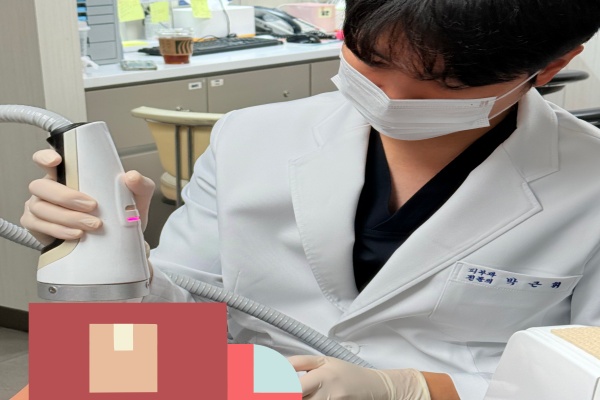
Korean Ultherapy: The Truth About Non-Surgical Facelift & Pricing
What Exactly Does Ultherapy Lift? The SMAS Layer Is the Key
Many people think Ultherapy simply “tightens skin with ultrasound.” The core technology of Ultherapy is High-Intensity Focused Ultrasound (HIFU). Its target isn’t the epidermis or even the dermis — it’s the SMAS (Superficial Musculoaponeurotic System) layer. The SMAS is a deep fibromuscular network that traditional facelift surgery lifts and secures. Ultherapy delivers focused ultrasound energy that bypasses the skin’s surface to create thermal coagulation points precisely at the SMAS layer, causing it to contract while also stimulating deep collagen regeneration.
This is fundamentally different from Thermage. Thermage works on the “loose” (skin laxity), while Ultherapy works on the “sag” (ptosis).
Why Do Some People Feel It “Didn’t Work”? — The Results Timeline Isn’t Linear
Ultherapy’s results follow a “tighten → lift → stabilise” curve.
- Immediately after: You may notice a slight lifting sensation as collagen contracts from the heat — but this is temporary.
- Weeks 1-2: The initial tightness subsides a little. This is normal; the real change hasn’t started yet.
- Months 1-3: This is the true effects window. Fibroblasts are activated, producing new collagen and elastin. Your jawline gradually becomes sharper, and nasolabial folds soften.
- Month 6: Results peak, lasting 12–18 months. Korean doctors generally recommend a maintenance treatment once a year.
Shots, Device, and Practitioner — The Three Variables That Determine Value
Shot count: A focal area requires 100–300 shots, full face requires 300–400 shots, and full face + neck requires over 600 shots. Korean prices are typically calculated per shot — 300 shots cost about 700,000–1,100,000 KRW, 400 shots about 1,000,000–1,500,000 KRW, and 600 shots about 1,500,000–2,200,000 KRW.
Device version: Ultherapy Prime (2nd generation) is more comfortable and faster than older versions. Non-original devices lack FDA clearance and real-time ultrasound imaging, so energy depth and accuracy can’t be guaranteed. For example, a Korean-made ultrasound device offering 1,000 shots for only 269,000 KRW is likely a HIFU alternative — not genuine Ultherapy.
Practitioner skill: Experienced doctors use the real-time ultrasound screen to pinpoint the SMAS layer, adjusting energy levels — lower over bony areas (jaw, cheekbones) and higher over soft tissues. Inexperienced technicians may use a single energy setting throughout, leading to uneven results.
Why Ultherapy Prices Range from 400,000 to 3,500,000 KRW in Korea
| Price Tier | Configuration | Price Range (KRW) |
|---|---|---|
| Low-end | Single area, non-original device, or promotional offer | 400,000 – 800,000 |
| Mid-range | Full face 300–400 shots, genuine Ultherapy Prime | 1,000,000 – 2,000,000 |
| High-end | Full face + neck 600+ shots, lead doctor performed | 2,000,000 – 3,500,000 |
A full-face Ultherapy in Singapore typically costs SGD 1,500–3,000 (about USD 1,100–2,200), whereas in Korea it’s about SGD 700–1,500 (USD 520–1,100) — a 40–50% saving. The price gap comes from Korea’s high clinic density, intense competition, and lower equipment procurement costs.
Ultherapy vs. Thermage — Understanding “Loose” vs. “Sag”
This is the most common question. Ultherapy and Thermage aren’t a binary choice — they’re tools for different problems. Choosing the wrong one wastes money.
Your facial contours are blurring, your jawline is less defined, you have visible double chin, or your cheek fat is descending — these are “sag” (ptosis) issues, rooted in the SMAS layer. Ultherapy lifts the “foundation,” restoring clear contours.
Best candidates: Those aged 30–50 with mild to moderate facial sagging, unclear jawline, or early double chin. Also suitable if you’ve had Thermage but felt it didn’t provide enough lift.
Your skin has become thinner, you have more fine lines and enlarged pores, or your face feels generally loose without significant sagging — these are “loose” (laxity) issues, rooted in the dermis and superficial fat. Thermage tightens the “fabric” of the skin.
Best candidates: Those aged 30–50 with skin laxity, fine lines, and a desire to improve overall texture and firmness.
Many Korean clinics offer “Thermage + Ultherapy” combo packages. Thermage tightens the dermis first, then Ultherapy lifts the SMAS — a comprehensive inside-out improvement. For example, Sia Dermatology in Gangnam offers a US-approved ultrasound + Thermage combo starting at around 2,990,000 KRW.
Best candidates: Those with both laxity and ptosis who want a one‑time comprehensive solution.