What Is Comprehensive Rhinoplasty? Risks, Costs, and What Southeast Asian Patients Must Know Before Going to Korea
Many Southeast Asians who fly to Seoul discover something only when they arrive in Gangnam: comprehensive rhinoplasty and simple rhinoplasty are not the same thing. Someone spends 30,000 on “rhinoplasty”; someone else spends 100,000 on “comprehensive rhinoplasty” — and they walk out with completely different faces.
There is abundant information online about comprehensive rhinoplasty — some say one surgery changed their entire face; others regret it so much they cannot sleep. 【What is comprehensive rhinoplasty?】 【What are the risks?】 【How much does it cost?】 This article breaks down all three questions at once.
What Is Comprehensive Rhinoplasty — It Is Not the Same as “Rhinoplasty”
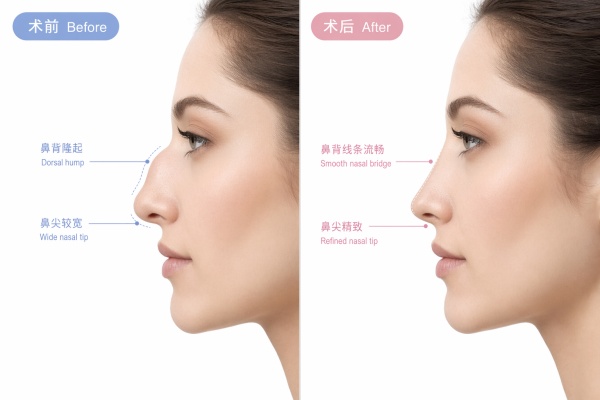
【Comprehensive rhinoplasty】, simply put, is surgery that comprehensively reshapes two or more areas of the nose. The doctor improves the nasal bridge, tip, nostrils, alar, columella, and other nasal defects to create a natural, aesthetically pleasing nasal shape.
Simple rhinoplasty solves one problem — the bridge is not high enough. An implant is placed to raise it, and that is it. Comprehensive rhinoplasty addresses the 【structural issues of the entire nose】: low bridge, rounded tip, wide alar, short columella, upturned nose, deviated nose — all can be addressed in a single surgery.
A comprehensive rhinoplasty typically may include: ePTFE or silicone augmentation, tip reduction, alar reduction, dorsal reshaping, nostril reduction, columellar lengthening, upturned nose correction, hump removal, and even revision of failed rhinoplasty.
【In one sentence: rhinoplasty is “augmentation”; comprehensive rhinoplasty is “redesign.”】
Korean hospitals performing comprehensive rhinoplasty typically start with a 3D-CT scan for detailed analysis. The doctor can clearly see the internal nasal structure, ensuring both unobstructed breathing and aesthetic results when designing the plan. This is a completely different approach from the assembly-line practice of “taking a celebrity photo and copying it onto your face.”
Risks of Comprehensive Rhinoplasty in Korea — What Should You Really Worry About?
“Is it safe to get comprehensive rhinoplasty in Korea?” This is the most frequently asked question by Southeast Asian patients. How big are the risks? The answer is complex: Korea leads the world in rhinoplasty volume, specialist expertise is deep, and regulations have tightened in recent years — but Korea has also had international news about ghost surgery and anesthesia-related deaths.
【Whether your surgery is safe depends almost entirely on the hospital and doctor you choose, not the country.】
- Ghost Surgery — The Doctor You Consulted With May Not Be the Doctor Who Operates
Ghost surgery refers to: the patient agrees during consultation to have Doctor A as the lead surgeon, but after anesthesia, the actual surgeon is Doctor B — typically an inexperienced resident or substitute doctor. The Korean Society of Plastic and Reconstructive Surgeons estimates approximately 【100,000 victims】 between 2008 and 2014, with 【5 deaths directly related to ghost surgery】 between 2014 and 2022. This phenomenon is most common at high-volume institutions scheduling 10-15 surgeries per day.
The Korean government has revised the Medical Act (legislated in 2021, implemented in 2023), requiring mandatory CCTV recording in operating rooms for general anesthesia surgeries and requiring hospitals to disclose all medical staff present during surgery. Patients have the right to request CCTV footage — 【but must apply before the surgery】. If you plan to go to Korea, always confirm during consultation that the doctor will personally perform the surgery, and proactively ask about the CCTV application process.
- Anesthesia Safety — About Half of Death Cases Involve Anesthesia
Between 2016 and 2024, among documented aesthetic surgery death cases in Korea, approximately 【half were related to anesthesia complications】. The proportion of board-certified anesthesiologists participating in aesthetic surgeries is less than 30%. Before going to Korea, you must confirm: will a 【board-certified anesthesiologist】 be present throughout your surgery, rather than a regular nurse or assistant?
- Post-Operative Complications — Infection, Hematoma, Implant Displacement, Tip Necrosis
Common complications after comprehensive rhinoplasty include: 【infection】 (if sterilization is incomplete or care is improper); 【bleeding and hematoma】 (about 5%-10% of patients experience this post-surgery); 【implant displacement or deviation】 (if the pocket is dissected too widely or external force impacts the nose); 【tip necrosis】 (from excessive resection or blood supply interruption, occurrence rate about 0.5%-1%, extremely difficult to repair); 【scar hyperplasia】 (for those prone to scarring or from rough suturing technique); and 【dissatisfaction with results】 (about 15%-20% of patients require secondary revision).
Key Actions to Reduce Rhinoplasty Risks:
- Confirm that the doctor you consulted with will personally perform the surgery
- Confirm that a board-certified anesthesiologist will be present throughout
- Choose a legitimate institution with laminar flow operating rooms
- Request 3D simulation images pre-surgery to clarify expectations
- Strictly follow post-operative care instructions; stay in Korea at least 7-10 days to complete suture removal
How Much Does Comprehensive Rhinoplasty Cost — Where Does the Price Difference Come From?
Korean comprehensive rhinoplasty prices vary widely. First-time comprehensive rhinoplasty starts at about 【6 million KRW】, up to 【12 million KRW】. Some clinics quote 3-6 million KRW; moderate difficulty runs about 3-8 million KRW. Revision rhinoplasty is more expensive, about 【8-20 million KRW】.
For the same “comprehensive rhinoplasty,” prices can differ by more than double. The core difference lies in what is being done:
| Treatment Type | Reference Price (KRW) | Description |
|---|---|---|
| Basic comprehensive | 3M-6M | Bridge + basic tip adjustment |
| Standard comprehensive | 6M-12M | Bridge + tip + alar comprehensive |
| Complex comprehensive | 10M-15M | Rib cartilage reconstruction + complex correction |
| Revision | 8M-20M | Remove old materials + reconstruction |
Starting in 2026, Korea has canceled the medical tourism tax refund for foreign visitors, which may increase actual costs by about 10%. During consultation, ask clearly what the quote includes — material fees, anesthesia, examinations, and post-operative care.
Advice for Southeast Asian Patients Going to Korea:
- 【First figure out whether you need “rhinoplasty” or “comprehensive rhinoplasty.”】 Only the bridge height is the issue -> simple rhinoplasty is sufficient; tip, alar, and columella all need work -> comprehensive rhinoplasty is the right answer.
- 【Evaluate the doctor’s revision cases.】 Comprehensive rhinoplasty revision is extremely complex, requiring at least 6-12 months for tissue recovery. Many doctors can do a good first-time comprehensive rhinoplasty; the ones who can fix a failed nose are the truly skilled ones.
- 【Confirm anesthesia safety.】 A board-certified anesthesiologist present is the safety baseline.
- 【Request CCTV footage from the hospital.】 Under Korean law, you have the right to apply before surgery. This is the most effective measure against ghost surgery.
- 【Allow enough time in Korea.】 At least 7-10 days to complete suture removal and first follow-up before returning home.
- 【Do not be attracted by low prices.】 A 3 million KRW basic comprehensive rhinoplasty and a 12 million KRW complex one differ by four times in price — the gap is not just materials, it is surgical complexity and the doctor’s time investment.
Final words: Comprehensive rhinoplasty is a precision surgery that changes facial structure. It is not “adding a bridge” — it is redesigning the entire nose. Choosing the right hospital and doctor matters more than reading a hundred online guides. Understanding what comprehensive rhinoplasty is, where the risks lie, and how the price is structured is far more important than making a last-minute decision after arriving in Korea.
Disclaimer: Price information is compiled from public sources and industry reports for reference only. Please consult a qualified physician for specific treatment plans and costs.